

Organizations face escalating technology risks, cyberattacks, tightening data privacy regulations, complex cloud environments, and the rapid disruption of AI. Pierag's Technology Risk Advisory practice embeds Digital Trust, compliance, and operational resilience directly into your digital strategy, transforming technology risk from a liability into a source of competitive advantage. As a trusted technology risk consultant to organizations across India and the US, we deliver structured, evidence-based assurance that gives boards, auditors, and regulators the confidence they need.








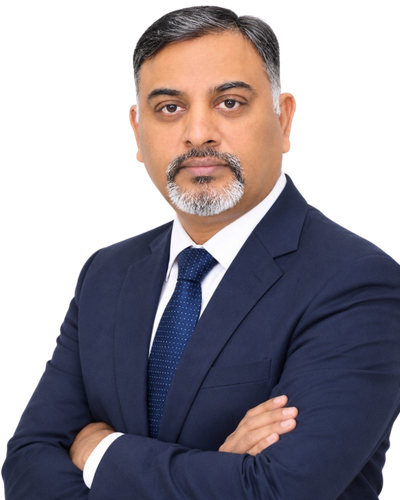
Piyush Paliwal’s professional journey reflects his commitment to bridging technology, risk, and business needs to create value-driven solutions for clients across industries. With over 9 years of experience spanning Deloitte USI, Deloitte Canada, HCL Technologies, and now Pierag Consulting, Piyush has developed deep expertise in Technology Risk Advisory, specializing in internal controls, IT audits, compliance, and risk assessments, delivering solutions across geographies including the US, Canada, UK, South Asia, and India.
At Pierag, he leads complex engagements in areas such as Risk-based Internal Audits, SOX compliance, SOC reporting readiness, ITGC reviews, IFC/ICOFR, SSAE18 assessments, and IT Application Controls. His expertise also extends to specialized areas such as Third-Party Risk Management (TPRM), Enterprise Risk Management (ERM), Data Privacy, Cybersecurity, GRC tools, IAM solutions, and regulatory frameworks like SOX, ICFR, COSO, and COBIT—helping organizations build robust compliance and control environments.Piyush’s work spans a broad spectrum of industries, including Telecom, Technology, Manufacturing, eCommerce, FMCG, BFSI, and Life Sciences & Healthcare. Beyond technical delivery, he has played a pivotal role in client relationship management, practice building, training, and quality reviews, as well as leading teams to navigate diverse regulatory requirements. His international experience—particularly his secondment with Deloitte Canada—has further sharpened his perspective on global compliance and risk.
He holds a Master of Business Administration (Finance) and a Bachelor of Engineering (IT). He is also a certified ISO 27001:2022 Lead Implementor and ISO 42001:2023 Lead Implementor (Intertek), demonstrating his commitment to staying ahead in information security and emerging AI governance. Piyush’s expertise in working with enterprise systems such as SAP, PeopleSoft, Windows, UNIX, SQL Server, and Oracle etc. adds further depth in aligning technology environments with internal control frameworks and regulatory guidance for complex and high-growth organizations.
Recognized as a trusted advisor, Piyush brings not just strong domain knowledge but also the ability to connect business priorities with technology controls, making him a leading voice in the Technology Risk Advisory space.

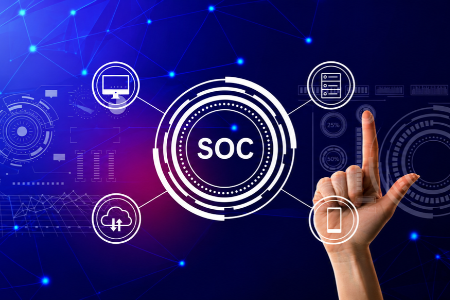
Ensure your IT environment is resilient and compliant with evolving regulations. Our Technology Risk Advisory services help you identify gaps, enhance control effectiveness, and build confidence in your technology landscape.
Technology risk advisory helps organizations identify, assess, and manage the risks that arise from their use of technology, from cyberattacks and data privacy obligations to cloud adoption, IT controls, and emerging technologies such as AI. As businesses become more digital and interconnected, technology risk is no longer just an IT concern; it directly affects financial reporting, regulatory compliance, operational resilience, and customer trust. Pierag’s Technology Risk Advisory practice helps organizations adopt technology confidently while keeping it secure, compliant, and well-governed.
Pierag’s Technology Risk Advisory practice covers IT general controls and IT SOX, SOC 1, SOC 2, and SOC 3 journey, cybersecurity assessments, data privacy and protection compliance, cloud security and governance, business continuity planning, and emerging technology and AI risk. The team combines traditional audit and controls expertise with hands-on technology experience across sectors including BFSI, manufacturing, aviation, and telecom. Engagements are delivered across India and the US and integrate closely with our SOX compliance and AI & Digital capabilities.
A SOC (System and Organization Controls) report is an independent attestation of the controls at a service organization. SOC 1 focuses on controls relevant to a client’s internal control over financial reporting. SOC 2 evaluates controls against the Trust Services Criteria, where security is mandatory and availability, processing integrity, confidentiality, and privacy are added based on what the engagement needs to cover. SOC 3 is a general-use, public-facing summary of a SOC 2. Service providers typically pursue SOC 2 to demonstrate security and build customer trust, while SOC 1 becomes relevant when a service impacts clients’ financial statements.
A Type 1 report assesses whether a service organization’s controls are suitably designed at a specific point in time, while a Type 2 report tests whether those controls also operated effectively over a defined period, typically three to twelve months. This distinction applies to both SOC 1 and SOC 2 reports (SOC 3, being a general-use summary, doesn’t carry a Type 1/Type 2 distinction). Type 1 is often a faster first step, but customers and auditors increasingly expect Type 2 because it demonstrates sustained control effectiveness rather than a single-day snapshot.
IT general controls (ITGCs) are the foundational controls over an organization’s IT environment, spanning access management, change management, program development and system implementation, and IT operations. They matter for SOX and ICFR because automated controls and system-generated reports can only be relied upon if the underlying ITGCs are effective; weak ITGCs increase financial reporting risk and the extent of manual testing required. Pierag evaluates ITGCs as part of both technology risk and SOX compliance engagements, including for Indian subsidiaries of US-listed companies.
Data privacy compliance is the practice of collecting, processing, and protecting personal data in line with applicable regulations. Which laws apply depends on where an organization operates and whose data it handles; common regimes include the EU’s GDPR, India’s Digital Personal Data Protection (DPDP) Act, California’s CCPA/CPRA, and Singapore’s PDPA. Compliance typically requires data mapping, governance, consent and rights management, and documented controls. Pierag helps organizations build privacy programs that align with these frameworks and stand up to regulatory scrutiny.
Cloud security is the set of controls, policies, and practices that protect data and workloads in cloud environments, while cloud governance ensures cloud adoption stays aligned with security, compliance, and cost objectives. Because cloud operates on a shared-responsibility model, organizations remain accountable for configuring access, protecting data, and monitoring their environment even when the provider secures the underlying infrastructure. Pierag helps organizations adopt and govern cloud platforms securely, addressing access management, configuration, and compliance risks.
A cybersecurity risk assessment is a structured evaluation of an organization’s security posture that identifies vulnerabilities, threats, and control gaps, then prioritises them by likelihood and potential impact. It provides the basis for a targeted remediation roadmap rather than ad hoc security spending. Pierag assesses security posture across systems, data, and processes, helping organizations strengthen cyber controls, meet compliance obligations, and build digital resilience.
Business continuity planning (BCP) is the process of preparing an organization to maintain or quickly resume critical operations during and after a disruption, whether a cyber incident, system failure, or external event. It typically includes business impact analysis, recovery strategies, and tested response plans, with IT disaster recovery forming the technology–focused component of the broader plan. Effective BCP is increasingly a technology risk priority since much of an organization’s operational resilience now depends on the availability of its systems and data.
Technology risk management is typically guided by established frameworks, with the right choice depending on an organization’s objectives and obligations. Widely used ones include the NIST Cybersecurity Framework, ISO/IEC 27001 for information security management, and COBIT for IT governance. Where organizations pursue SOC attestation, controls are additionally evaluated against relevant criteria, the Trust Services Criteria for SOC 2 and SOC 3, or control objectives typically informed by the COSO framework for SOC 1. Many organizations apply more than one framework, since customers, regulators, and auditors expect different assurances. Pierag helps organizations select and implement the frameworks that fit their risk profile and stakeholder requirements.
AI and emerging technologies are expanding the technology risk landscape, introducing new questions around model governance, data quality, security, accountability, and regulatory compliance, often faster than governance frameworks can keep pace. The central issue is rarely whether to adopt these tools, but who is accountable when they fail and how their risks are controlled. Pierag helps organizations govern AI and emerging technology risk through practical control frameworks, informed by our AI & Digital capabilities and latest thinking on emerging risks.
Pierag’s Technology Risk Advisory practice pairs deep audit and controls heritage with hands-on technology expertise, so IT controls, SOC readiness, and cybersecurity are approached with the same rigor as financial assurance. The team includes certified specialists, such as CISA-qualified professionals and those certified across multiple ISO standards, with experience across regulated and complex sectors, and a global delivery model spanning India and the US. This combination is particularly valuable where technology risk intersects with SOX, ICFR, and financial reporting. To explore how the practice can support your objectives, talk to a Technology Risk Advisory expert.


